


14 May Meeting Vulnerability: Growing Through Stories, Silence, and Reflection
A field account from Sindhupalchok and Mustang on how climate change and migration shape everyday livelihoods — with concrete adaptation practices, research insights, and ethical reflections.
ArrivalWhen Research Meets Reality
I arrived in the village carrying structured questionnaires, field notes, and prepared interview guides. But very quickly, I realised that vulnerability cannot be contained within survey boxes. It reveals itself in waiting — at a communal tap, beside a cracked terrace, inside a quiet home where the younger generations have already left.
From Sindhupalchok to Mustang, I began to see how climate stress and migration are not separate stories. They move together, reshaping who stays, who leaves, and how everyday life continues.
Sindhupalchok Part One
Waiting for Water, Waiting for Return
In Sindhupalchok, climate change is visible in drying springs and erratic rainfall. Water now arrives only in rotation. Households gather at communal taps and wait — sometimes for hours — for their turn.
"Before, the water ran all day. Now we just have to wait for it."
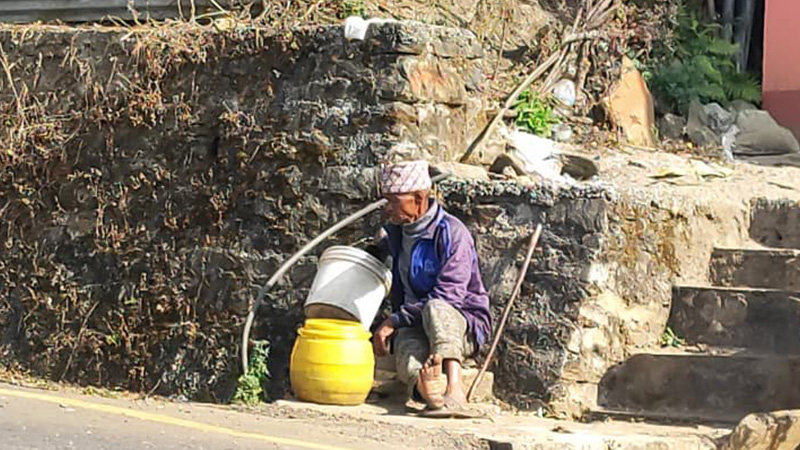
An elderly man waits for his turn at the rotational water supply — a system increasingly strained by erratic rainfall. Sindhupalchok.
Terraced fields bear scars from landslides. Soil quality declines. Pest infestations spread across maize plots that once yielded reliably.
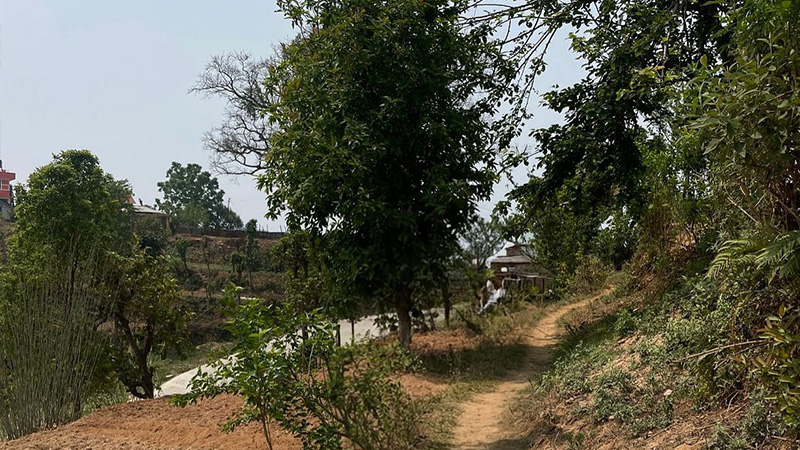
Agricultural land remains dried and barren — poor soil quality, limited irrigation, and rampant pest infestation increasingly shape decisions around migration, labour allocation, and household income. Sindhupalchok.
Almost every household has at least one member who has migrated — to Kathmandu, to the Gulf, or elsewhere in Nepal. Migration is no longer exceptional; it is embedded in the village economy. Young men leave first. Increasingly, young women follow. What remains are elderly parents, daughters-in-law, and grandchildren.
With migration comes redistribution. Women and older household members manage agricultural work, water collection, livestock care, and childcare simultaneously. Remittances supplement income, but they do not replace labour.
In Simpalkavre, farmers experiment with kiwi and chayote squash — climber crops believed to withstand erratic rainfall better than traditional varieties.
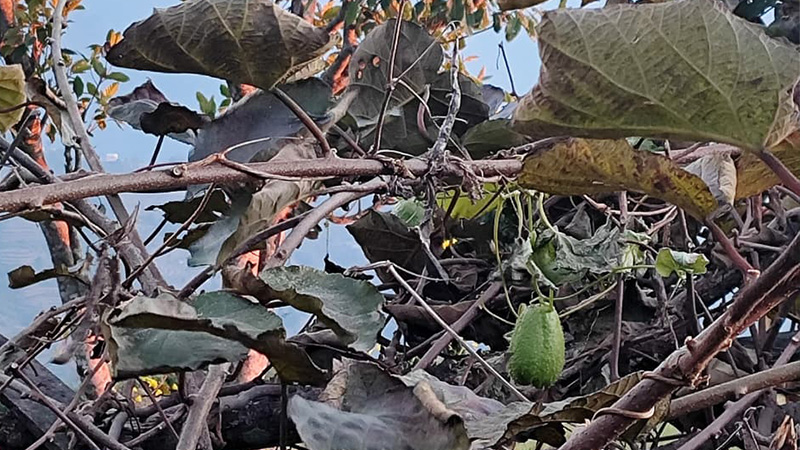
Despite declining yields, locals are experimenting with climber species — kiwi and chayote squash — exploring alternatives that may withstand erratic rainfall and rising temperatures. Simpalkavre, Sindhupalchok.
Adaptation here is practical and negotiated: crop diversification, terrace repair, water-sharing coordination. When landslides damage irrigation channels, households repair them collectively.
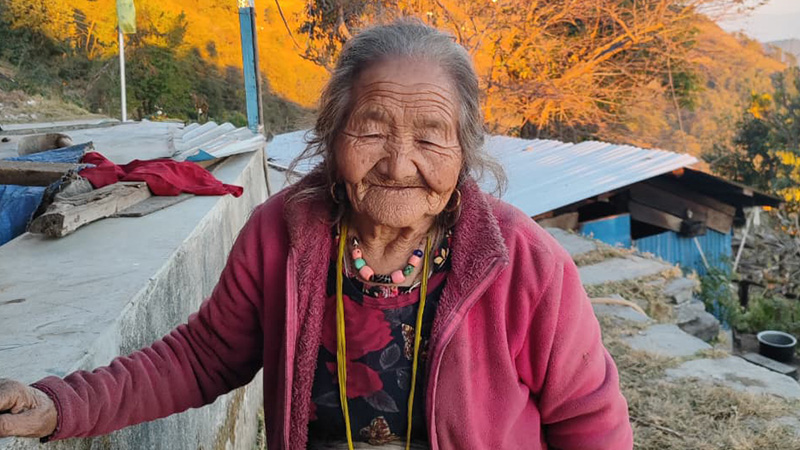
A grandmother tends her grandchildren while clearing a small maize field disrupted by landslides. Sindhupalchok.
"If they don't go, how will we manage? But if they all go, who will stay?"
Her question stayed with me. Migration here is both a solution and a strain. It brings remittances, but redistributes care and agricultural burdens onto those who remain. Conversations made clear that small-scale irrigation investments, landslide-resistant water systems, and gender-responsive agricultural support could significantly ease pressures that households currently absorb privately.
Resilience here is not dramatic. It is quiet coordination — of water, labour, and survival.
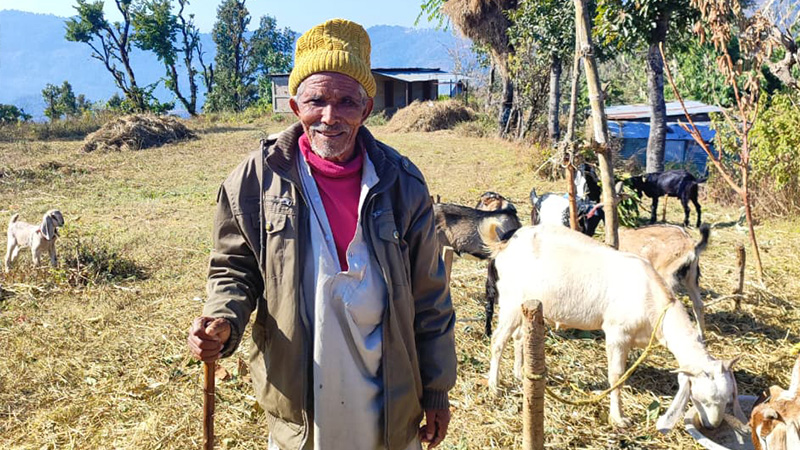
An elderly farmer quietly sustains his herd and household — embodying resilience and adaptability amid the challenges of outmigration. Sindhupalchok.
Mustang Part Two
Scarcity, Institutions, and Dignity
Leaving Sindhupalchok, the terrain shifted from humid hills to dry, open valleys. In Mustang, climate stress feels different — less sudden, more exposed. Residents describe warming summers, shorter winters, and increasingly erratic precipitation. Seasonal snowmelt patterns fluctuate. Water flows are less predictable.
"The snow used to stay for longer, it would come up to our knees. Now it disappears too early, and there is less than a foothold of snow every year."
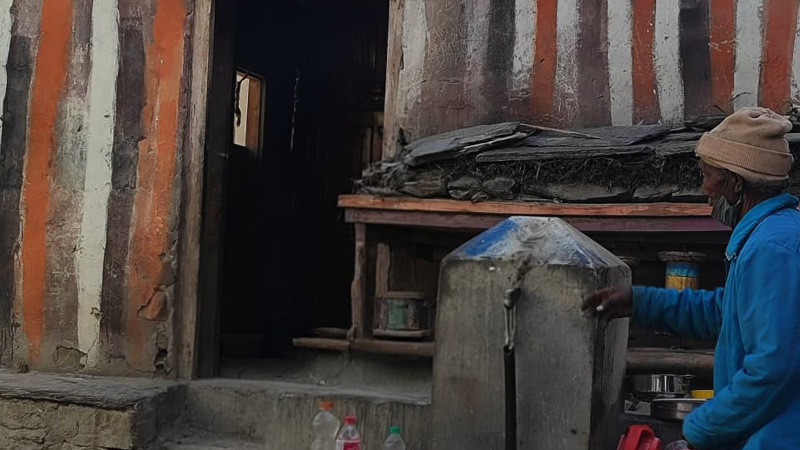
Communal taps, supplied by seasonal snowmelt, remain the village's core source of drinking water. Phalyak, Mustang.
In Khinga, some households have relocated to higher ground after repeated flooding events.
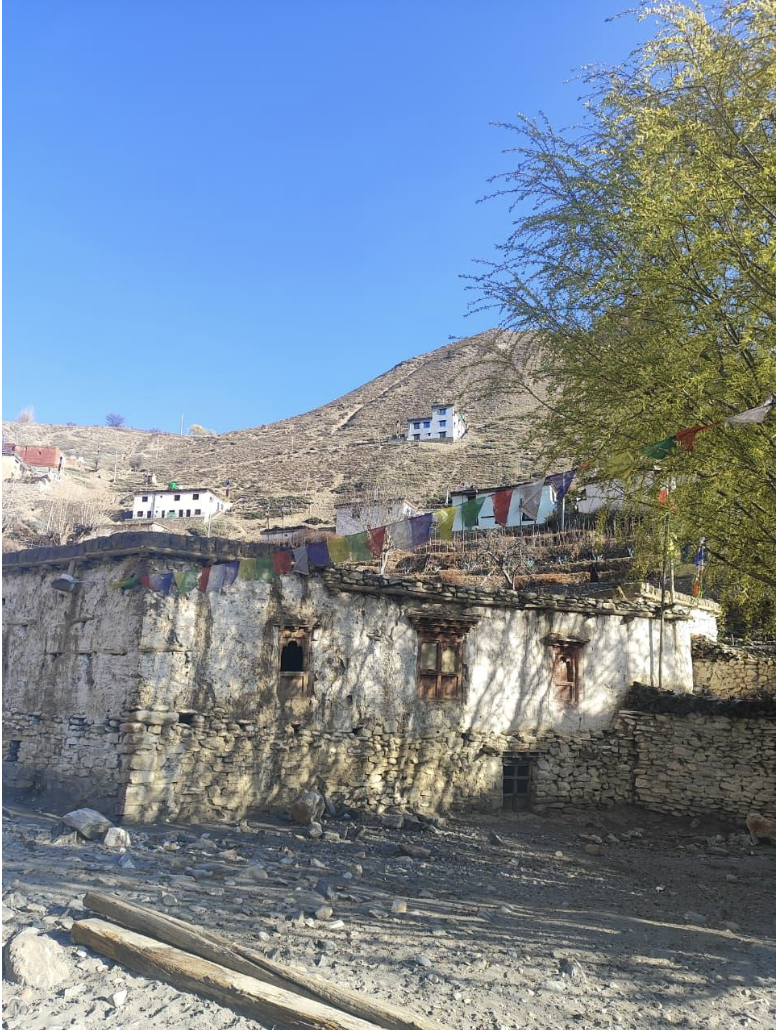
Residents relocating their homes to higher ground after repeated floods; terraces and channels are repaired collectively. Khinga, Mustang.
Terraces and irrigation channels require frequent repair. Climate change here is interpreted not through technical language, but through altered planting calendars and uncertain water access.
Migration continues in varied forms. Some leave for urban employment or international work. Others engage seasonally in tourism connected to pilgrimage routes. Migration does not empty Mustang; it reorganises labour. Fields remain cultivated — but often by women and elders coordinating irrigation across households.
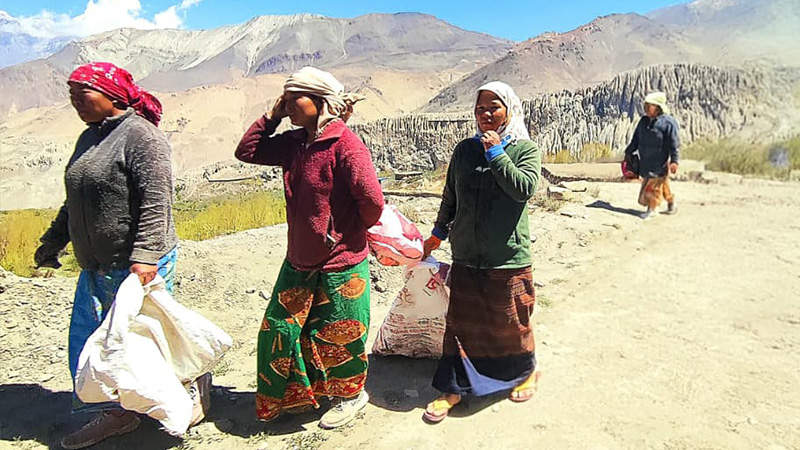
Women coordinate water use and tend to the fields left behind by migrating household members. Mustang.
"If we don't coordinate, no one eats."
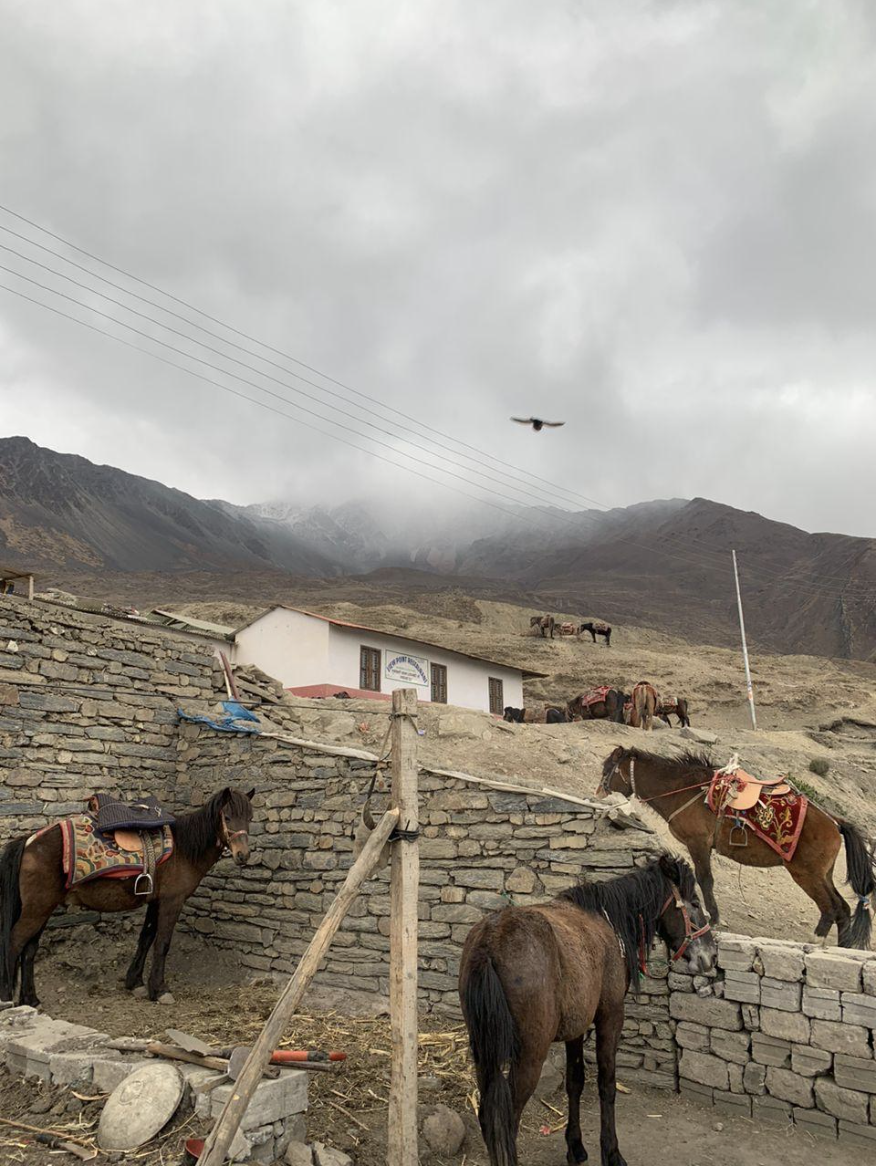
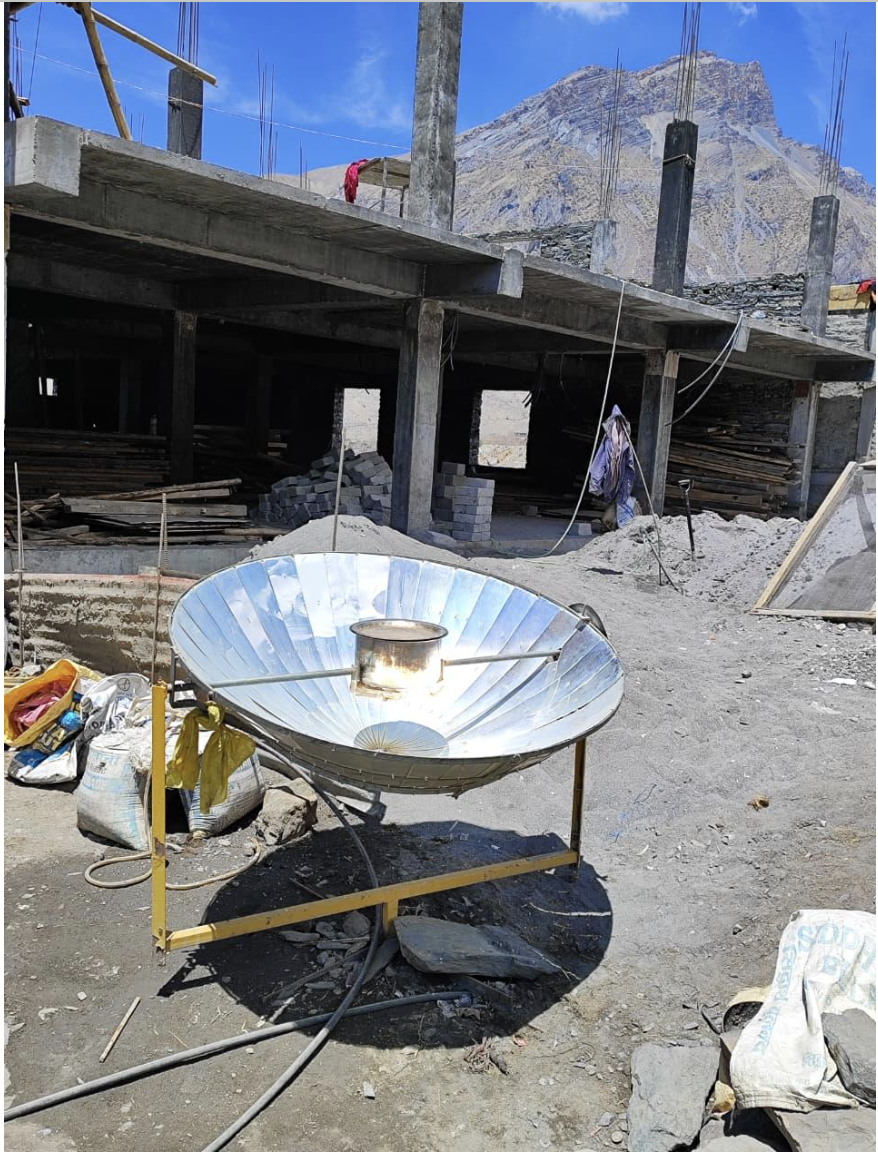
(Left) A shared pasture serves as the resting space for horses used by guides and porters assisting pilgrims to Muktinath — livelihoods and religious mobility intertwined. (Right) Solar heaters, widely adopted, offer incremental adaptation to harsh winters. Mustang.
Traditional institutions such as the mukhiya and local mother-groups remain central to water management. Shared pastures support horses used by guides and porters. Here, adaptation is layered: communal terrace repair, water-sharing institutions, crop rotation, and livelihood diversification shaped by tourism and pastoral mobility.
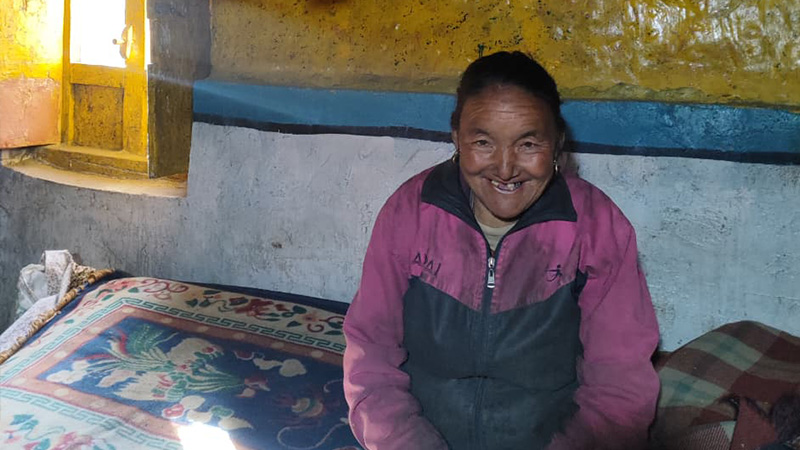
A woman traces her name with the research team — a small but powerful act of recognition and participation. Sangta, Mustang.
It was a small act, but powerful. Participation mattered. Recognition mattered. In that moment, I realised adaptation is not only about infrastructure — it is about dignity.
Mustang shows how strong local institutions continue to mediate climate stress. Yet even these systems strain under increasing environmental uncertainty. Strengthening snowmelt-fed water storage, reinforcing traditional governance structures, and supporting climate-resilient crop trials would build upon — rather than replace — the local systems already in place.
Dhakarjong & Jhong Part Three
Rhythms Under Pressure
Further north, in Dhakarjong and Jhong, adaptation unfolds through seasonal precision. Farmers describe dry spells and shifting planting cycles. Buckwheat harvest timing has changed. Soil moisture is less reliable. Younger household members increasingly seek work elsewhere, leaving ageing populations to sustain agricultural routines.
"The young ones leave because they must. But someone has to know when to plant. That is when you feel their absence."
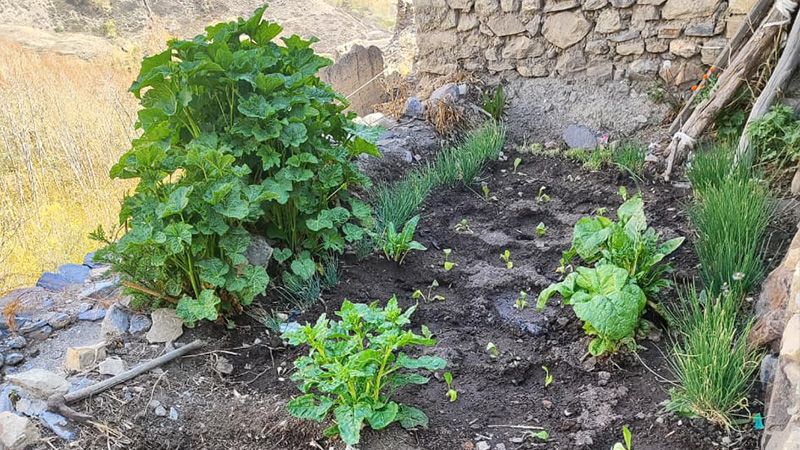
Following the buckwheat harvest, farmers plant spinach and chives — a seasonal crop rotation that supports household food needs. Jhong, Mustang.
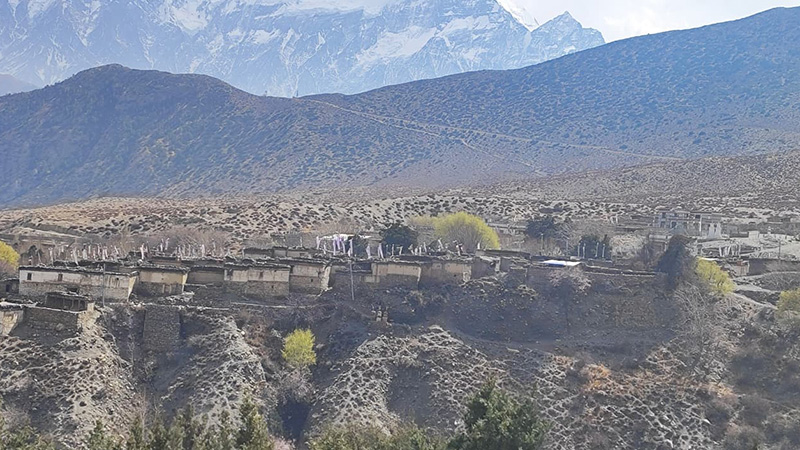
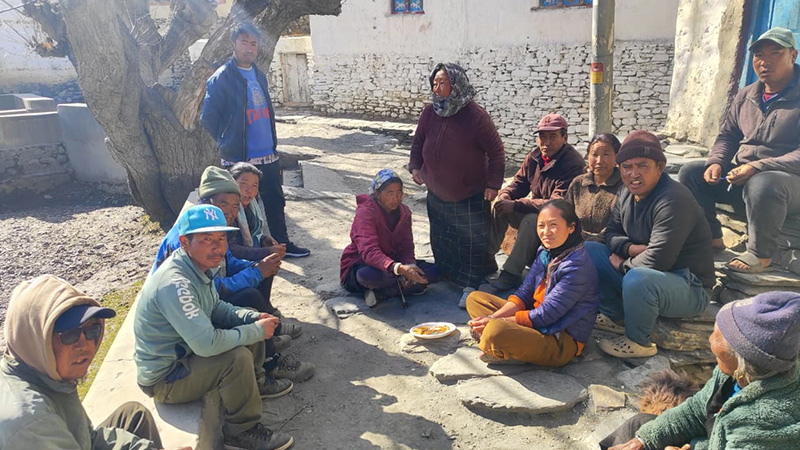
(Left) Terrace repair and crop diversification help households cope with dry spells and changing seasons. (Right) Community members coordinating agricultural work, water management, and household care — the pulse of everyday adaptation. Dhakarjong, Mustang.
Terrace repair is continuous. Water management is coordinated carefully across households. Livelihood buffers include goat herding and small trade. Adaptation here is rhythmic — tied to seasons, terrain, and cooperation.
Watching community members repair terraces together before winter, I noticed how little was said. Labour moved through familiarity rather than instruction. Climate stress does not dismantle social ties here — it tests them.
In these villages, accessible seasonal climate forecasts, terrace reinforcement support, flexible livelihood diversification, and targeted assistance for ageing farmers could strengthen adaptive capacity without disrupting local rhythms. Resilience here depends on collective memory — knowing when to plant, when to repair, when to share water.
Ethical Reflexivity
Listening as Responsibility
Fieldwork changed how I understand resilience. I used to think of adaptation primarily in technical terms — irrigation systems, crop trials, preparedness plans. Those remain important. But walking through the landscapes of Sindhupalchok and Mustang, I began to view adaptation differently.
It is negotiated at water taps. It is carried in the memory of planting cycles. It is sustained by women coordinating irrigation in the absence of migrating family members. It is visible in an elderly farmer tending his herd without ceremony.
Resilience is not only something designed through policy. It is lived through cooperation, compromise, and care. The systems that surround these communities matter. But so do the relationships that quietly hold everyday life together.
Listening to these stories didn't make me more certain. It made me more attentive. And perhaps, that is where responsible research begins.