


14 May Following the Fabric: A Walk Through Perumbavoor’s Migrant Market
In November 2025, I conducted my second round of fieldwork in Perumbavoor, one of the CLAPs project study sites in Ernakulam district, where we are examining the impacts of climate change on migrant workers. As I returned, I was aware of a familiar unease, rooted less in the place itself and more in my memory of a specific experience from my first visit. That earlier encounter had shaped how I anticipated my return, making me more conscious of my own vulnerability as a female researcher in the field.
This specific study site in Perumbavoor is predominantly occupied by single migrant men, and much of my earlier fieldwork had unfolded in streets and corridors of migrant housing where we conducted interviews. I vividly remembered an isolated encounter with one migrant man, possibly intoxicated, who interrupted our interviews repeatedly, demanding my attention and phone number despite clear refusals. That lingering feeling stayed with me as I stepped back into the site this time.
Walking through the site alongside colleagues who were documenting the market with their cameras, I found myself searching for something to hold on to. This market is frequented primarily by migrant men living in the surrounding areas and was especially crowded as it was a Sunday evening. Men were shopping for groceries and meat, running small errands or simply standing around and talking. I began taking photographs too, tentatively at first, almost as a way to steady myself. My eyes, initially anxious and scanning, gradually settled on a recurring sight: the lungi. Many of the migrant men I encountered wore lungis, each distinct in its colour, pattern, and drape.
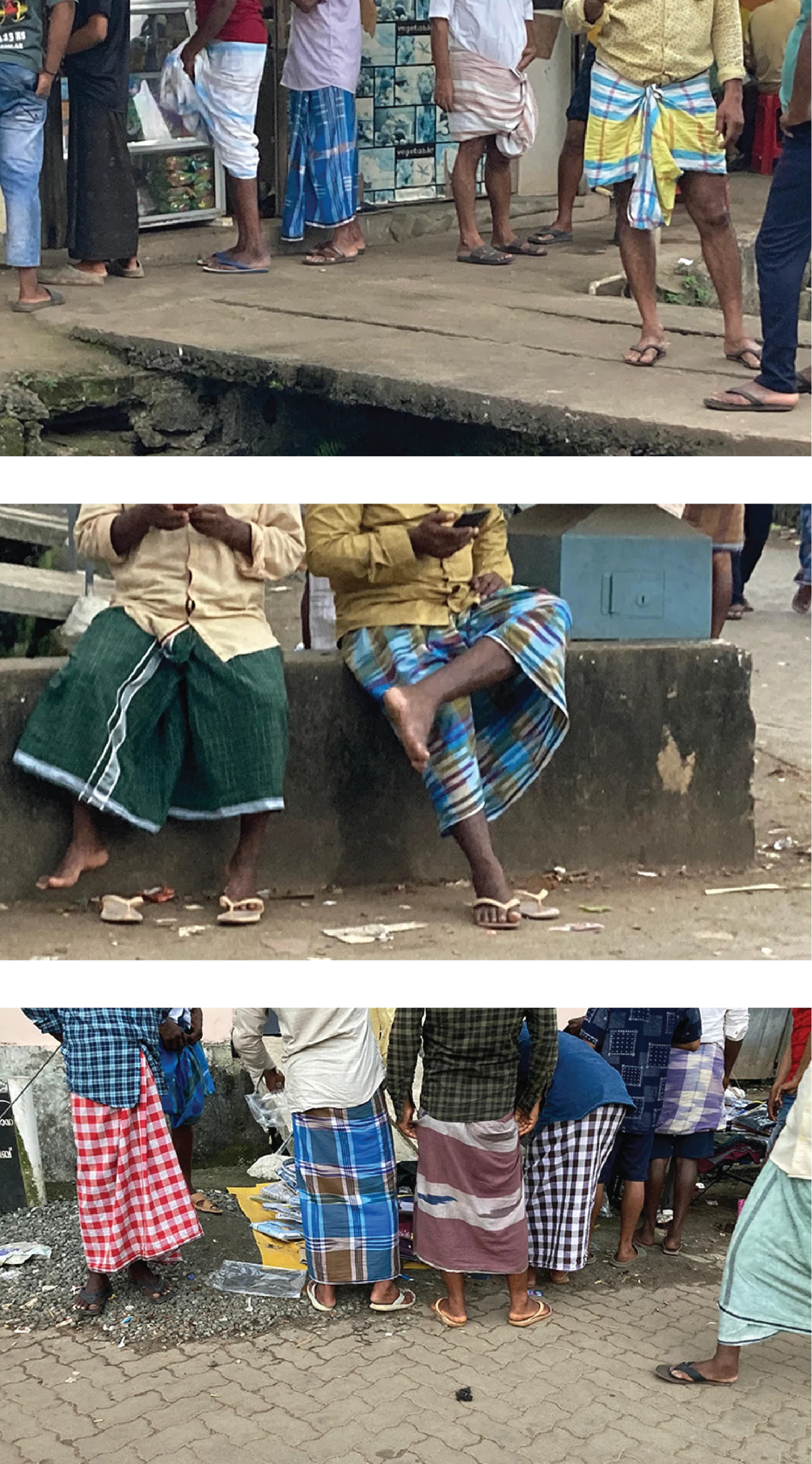
I began photographing lungis deliberately. Directing my lens downward—to fabric, folds, feet, and posture—allowed me to stay present without feeling exposed. This choice was also ethical and situational: photographing bodies partially helped avoid identification or intrusion, and it offered a way to ease moments of direct gaze in a space where we clearly stood out as outsiders with cameras. Over the evening, I documented lungis as they appeared across different moments. Men stood in clusters along the pavement, waited outside shops, sat on low stools or concrete edges, leaned against walls, crossed streets, and lingered in narrow lanes. What appeared repeatedly in my line of sight were lungis—everywhere, in motion and at rest.
There were lungis in deep blues, faded greens, checks, and soft stripes; tied high for work, loosened for rest, folded neatly or worn with casual ease. They were held while crossing puddles, adjusted while sitting, gathered while walking through narrow lanes, and tucked in during everyday chores.
fabric, folds, feet, and posture
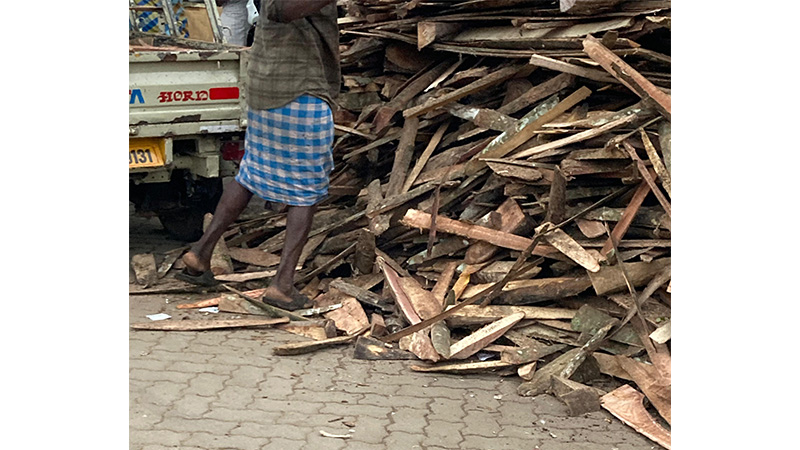
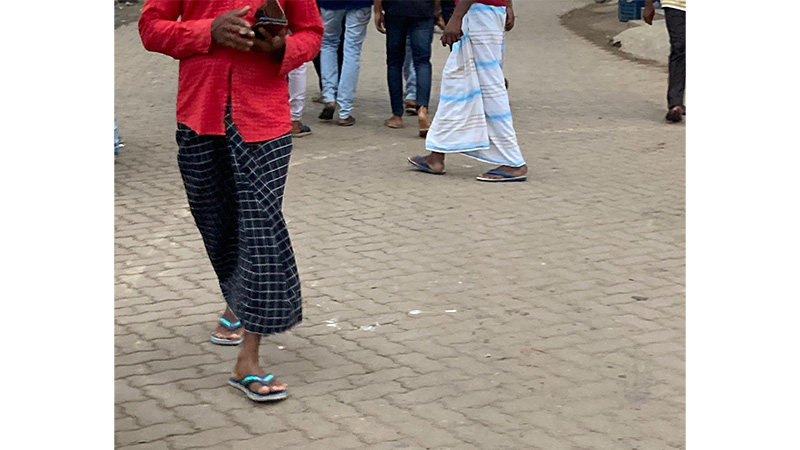
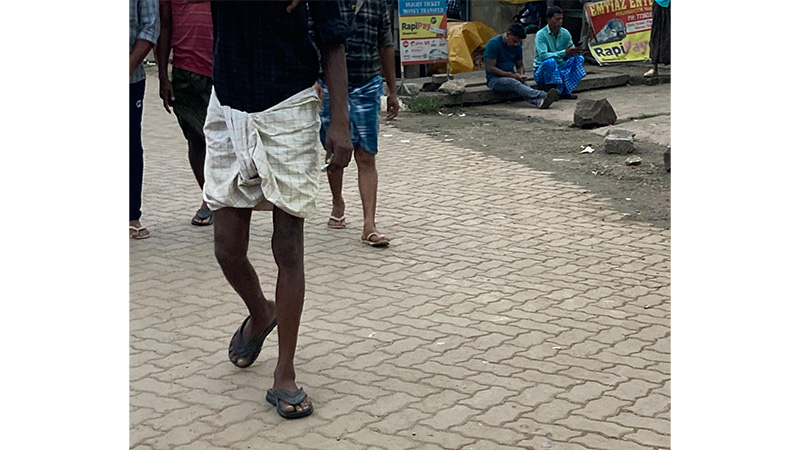
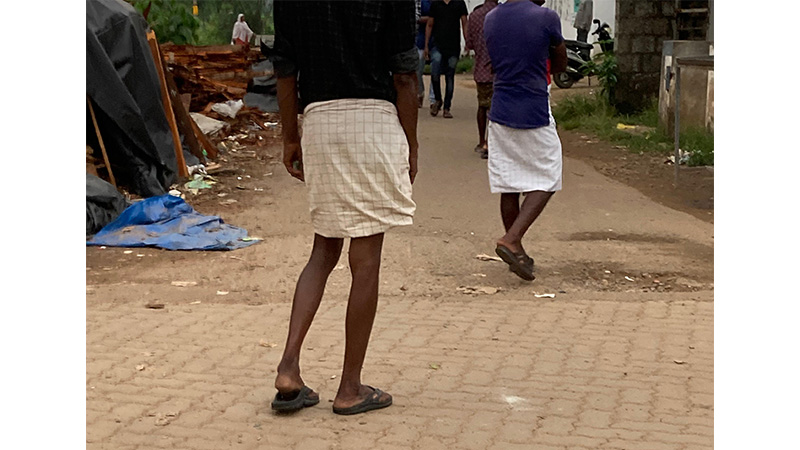
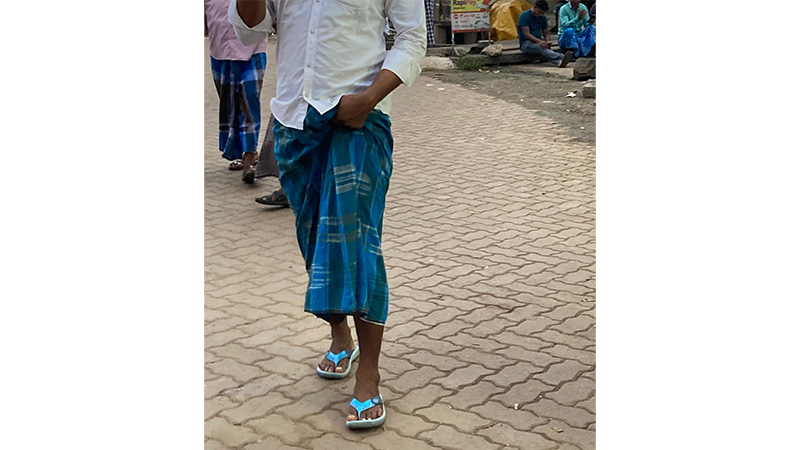
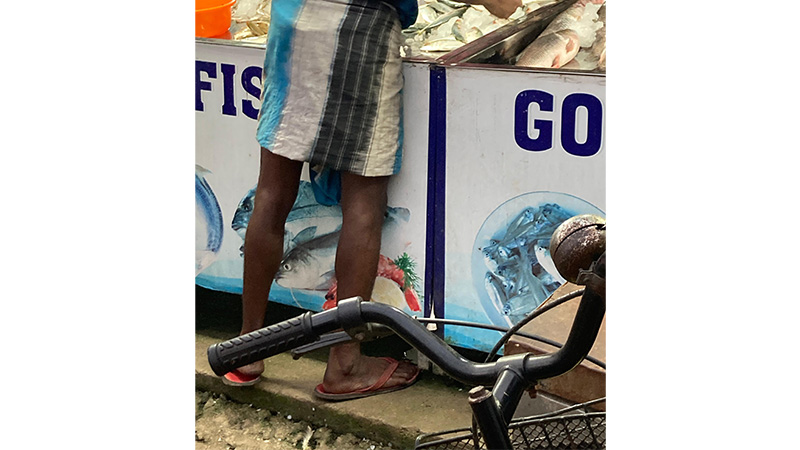
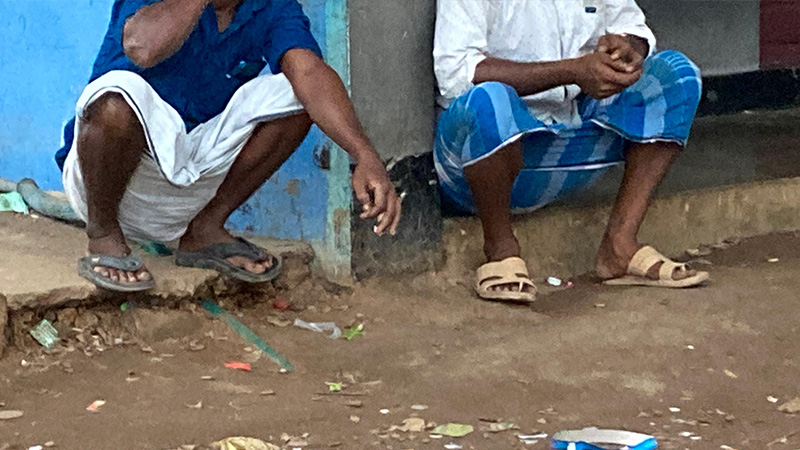
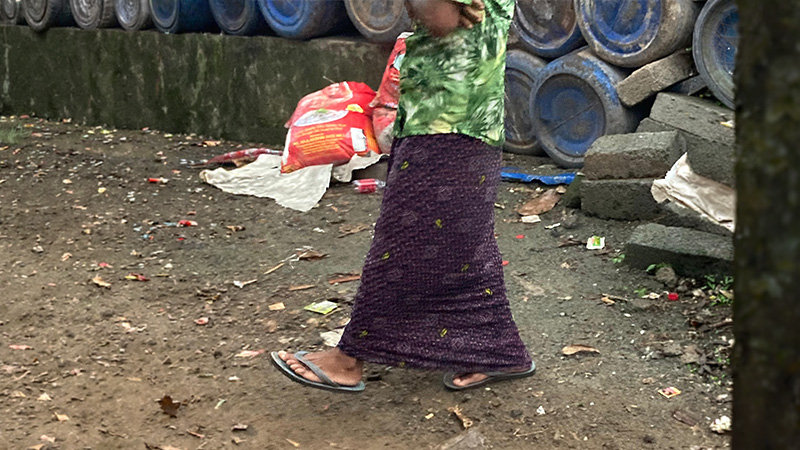
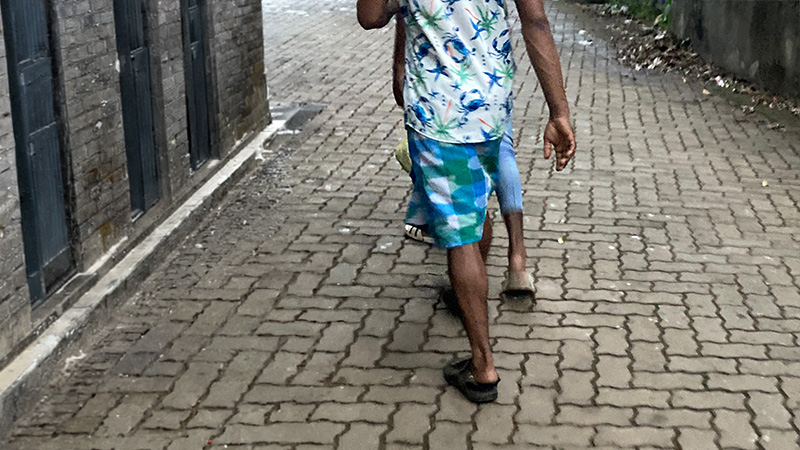
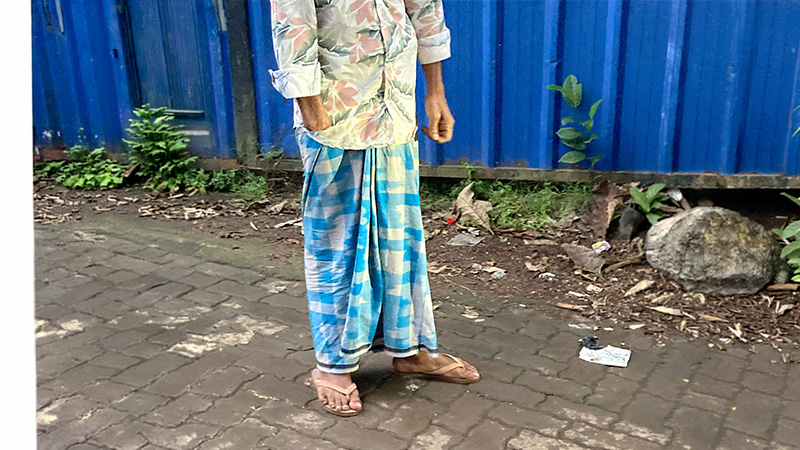
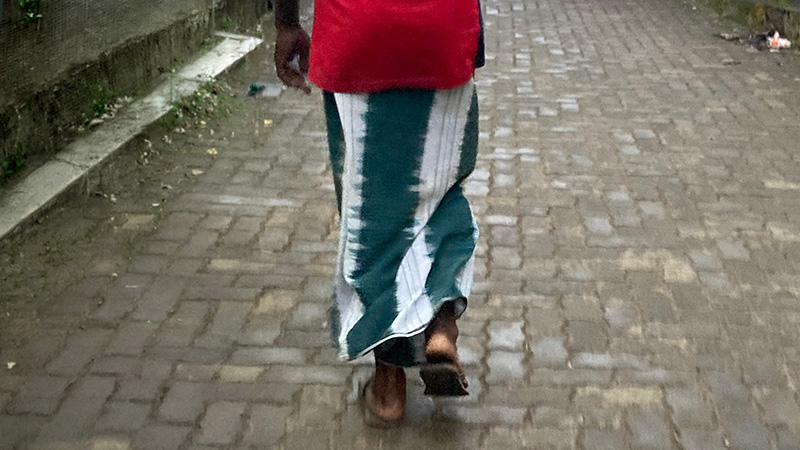
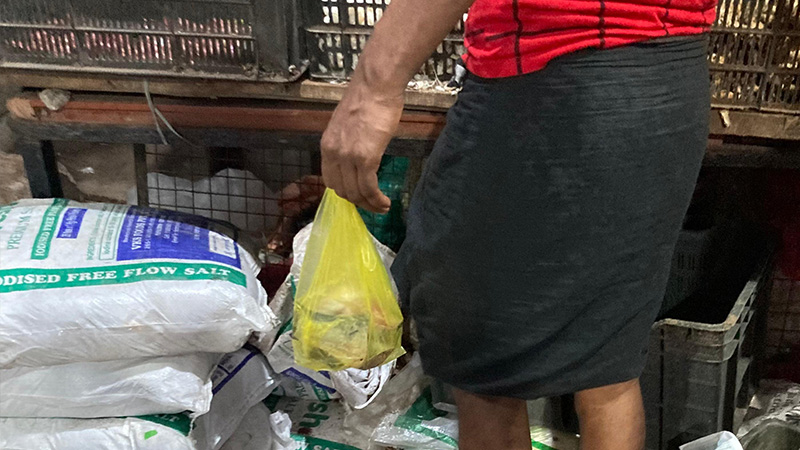
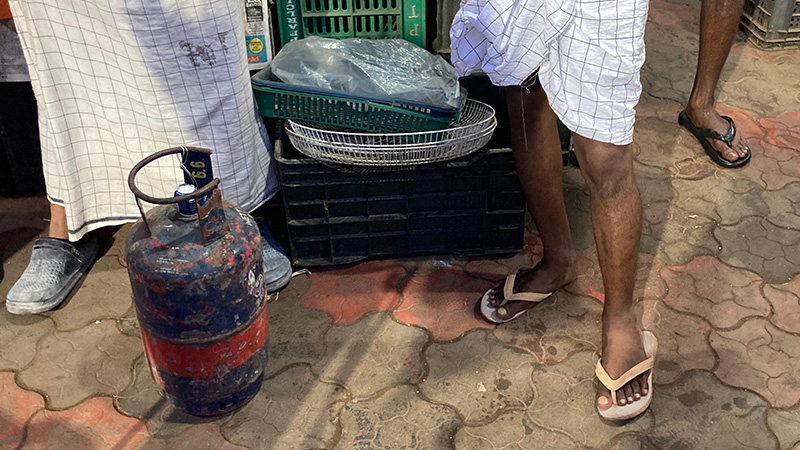
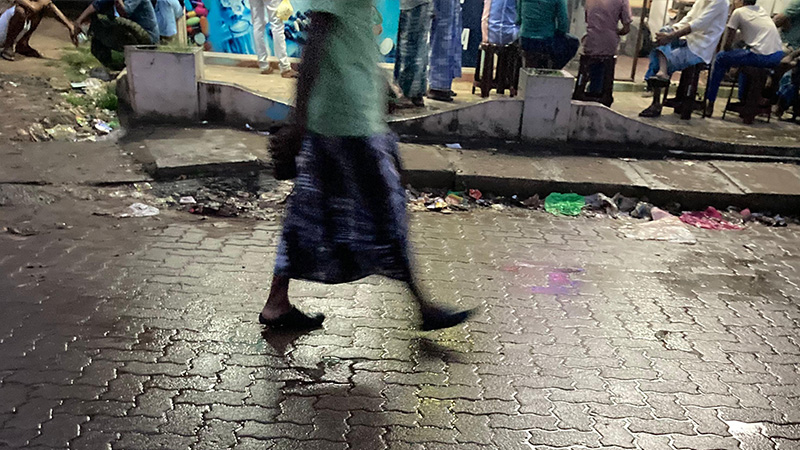
Although lungi is also commonly worn by men in Kerala, the versions worn by migrant men from West Bengal and Odisha differ in noticeable ways. Many men wore lungis typical of eastern India, lighter cotton, brighter checks, and different tying styles, which subtly distinguished them within the Kerala streetscape.” For me, the lungi became a subtle marker of identity, a piece of home carried into a new landscape, its folds and fabric offering a way of reading migration without claiming to define it.
Through my lens, the discomfort began to recede, replaced by a rhythm of observation and artistry. What started as a way to manage my own discomfort slowly became a way of reading space. In these images, the lungi emerges as more than a garment. For me, it points to migration, labour, climate, and masculinity in a limited, material sense - how men’s everyday clothing shapes their bodily presence and movement in public space. What followed was a visual journey through the market in Perumbavoor, reflecting my own careful, partial, and situated way of seeing it.