


23 Jun If I Could Move Back Home
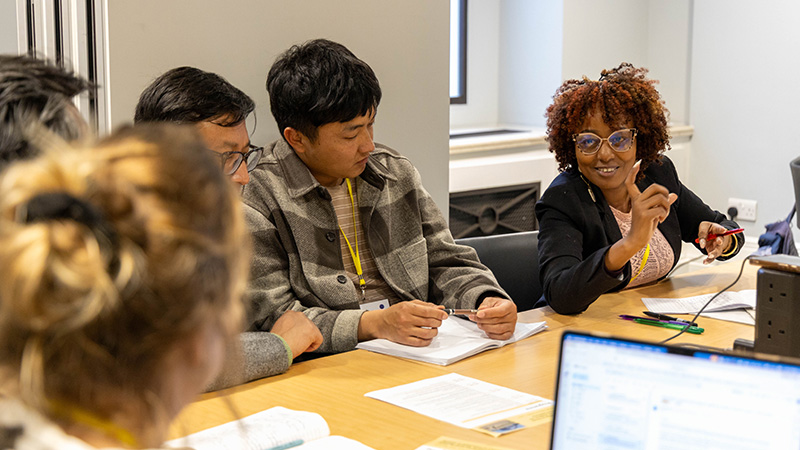
During a break at the conference Mobility in Adaptation to Climate Change: Science, Evidence and Policy in London in May, Prof Neil Adger asked a couple of us a simple question.
"If you had the chance to reverse migrate, where would you go?"
My answer came immediately.
"Ooty."
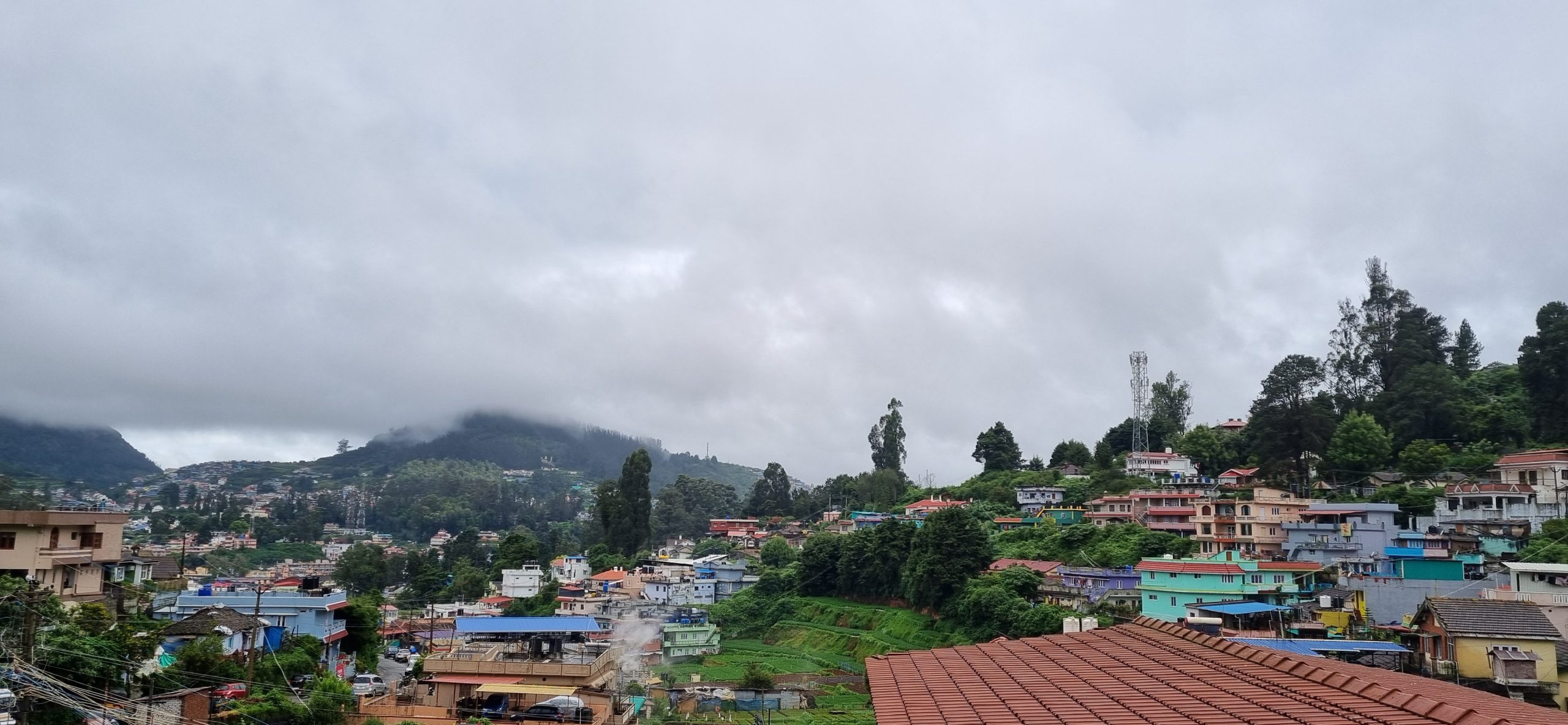
Ooty is a hill town known for its cool climate, tea gardens, shola forests, and colonial heritage. A popular tourist destination, it is also part of a fragile mountain landscape where changing rainfall patterns, water stress and shifting livelihoods shape everyday life. Credit: Sofia Juliet Rajan
For those unfamiliar with it, Ooty is a small hill town in the Nilgiris mountains of Tamil Nadu in southern India. It is where I grew up. Like many people from smaller towns, I left home in my early twenties in search of work and opportunities that were difficult to find locally. My journey took me first to Hyderabad and later to several other cities in south India.
But the answer was not quite that simple. While I would happily move back to Ooty, I probably cannot. The work I do today, the institutions I work with and the opportunities that sustain my career are located elsewhere.
The exchange stayed with me throughout the conference because it captured one of the central themes that emerged repeatedly over two days of discussions: mobility is not simply about movement. It is also about opportunity, aspiration, attachment and choice.
When migration enters public debate, particularly in the context of climate change, it is often framed through the language of crisis. People move because floods destroy homes, droughts destroy livelihoods or environmental conditions become intolerable. These realities are important and increasingly visible across the world. Yet one of the strongest messages from the conference was that mobility cannot be understood through crisis alone.
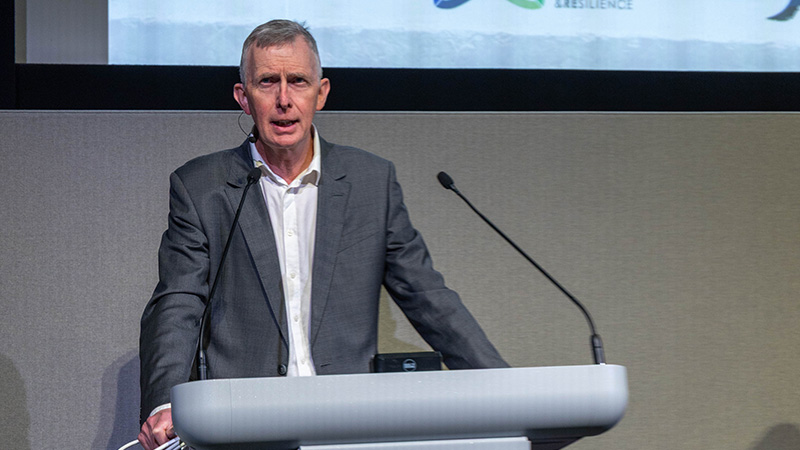
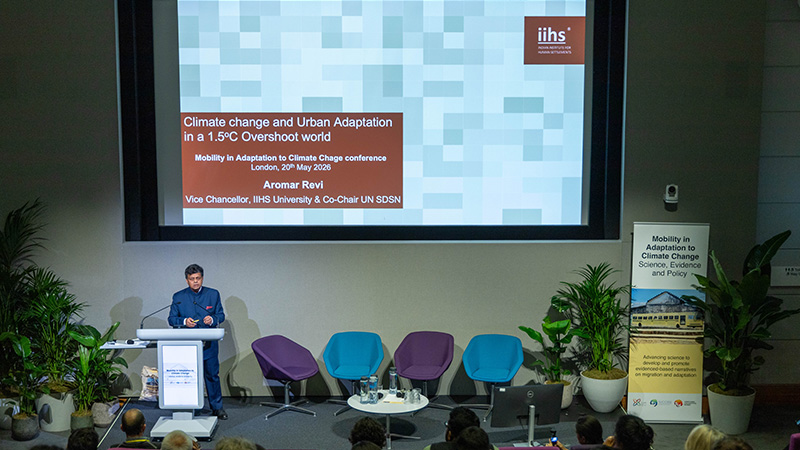
As Neil Adger observed in his opening address, migration is not a failure of adaptation; it is part of adaptation.
This may sound straightforward, but it challenges many assumptions that continue to shape public discussions about climate mobility. Throughout the conference, researchers presented evidence from South Asia, Africa, Europe and the Pacific showing that mobility is often one of several ways through which people respond to changing environmental, economic and social conditions. Climate change may influence these decisions, but it rarely acts alone.
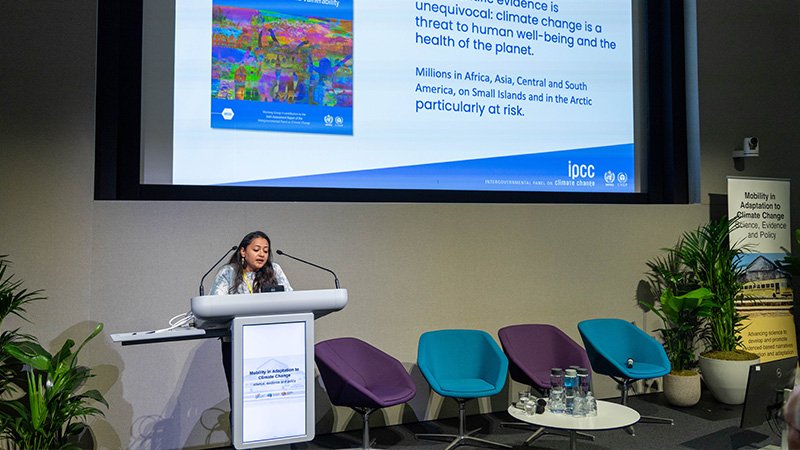
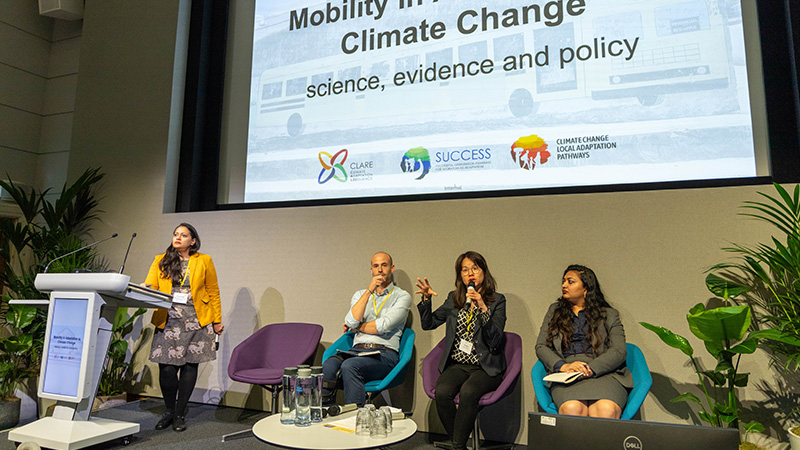
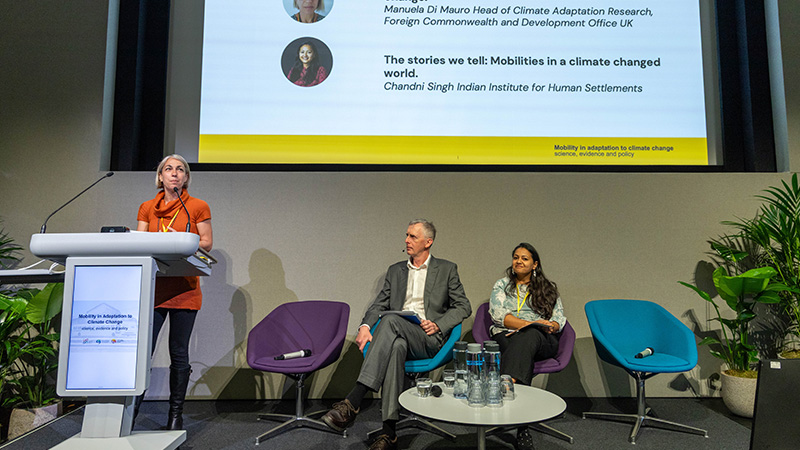
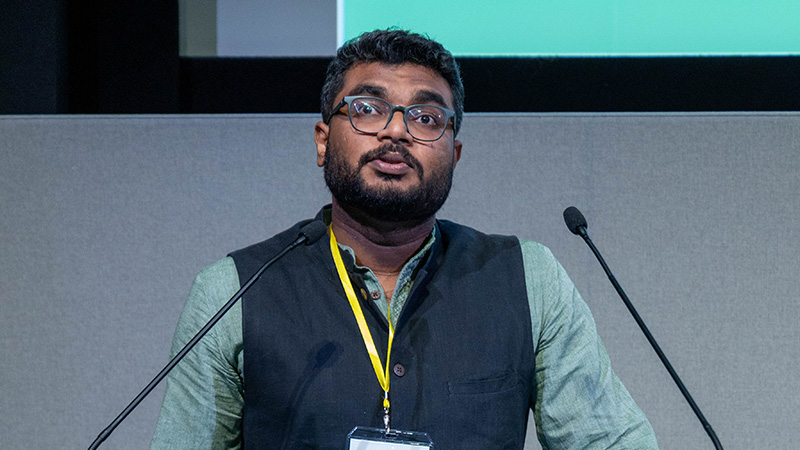
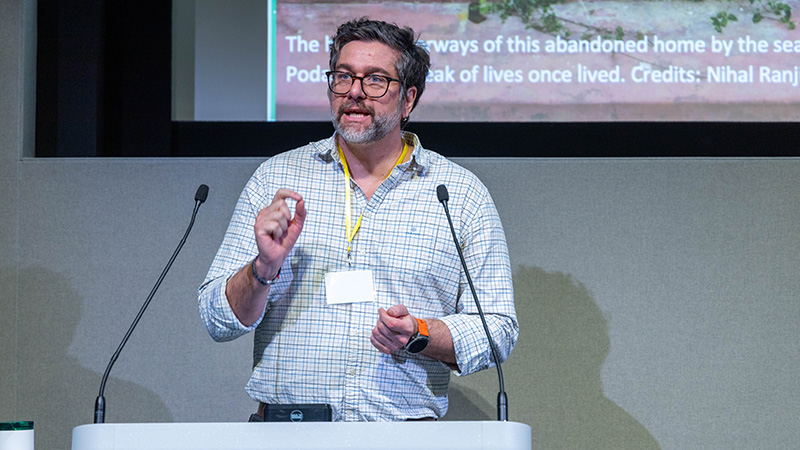
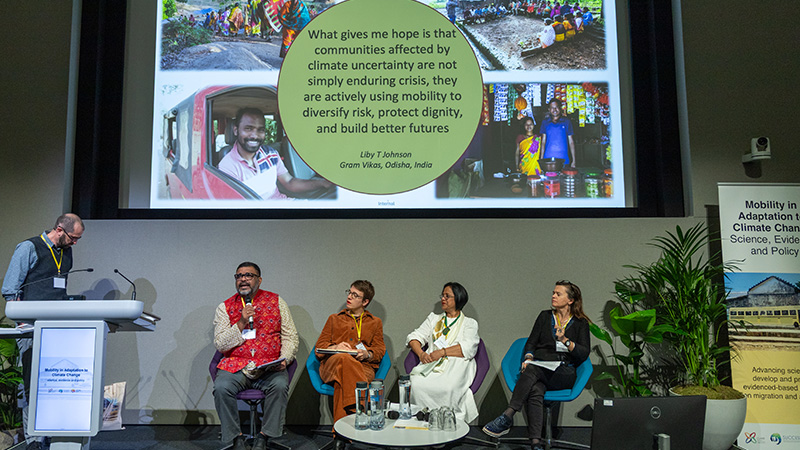
One of the most compelling presentations came from Chandni Singh, who opened her session with the story of Prasanna, a farmer from Kolar district in Karnataka. Faced with declining groundwater availability and increasing uncertainty in agriculture, Prasanna began travelling long distances to Bengaluru for work while maintaining ties to his village and farm. Other members of the household took on different responsibilities across locations. The story challenged the idea that migration is a one-time event or a complete departure from place. Instead, mobility formed part of a wider livelihood strategy that connected village and city, farming and wage labour, movement and staying.
That idea resurfaced throughout the conference. Researchers repeatedly emphasised that households are often made up of both movers and stayers. Migration is rarely an individual decision detached from family, community and livelihood systems. Rather, it is often one component of a broader effort to manage risks, diversify income and pursue opportunities.
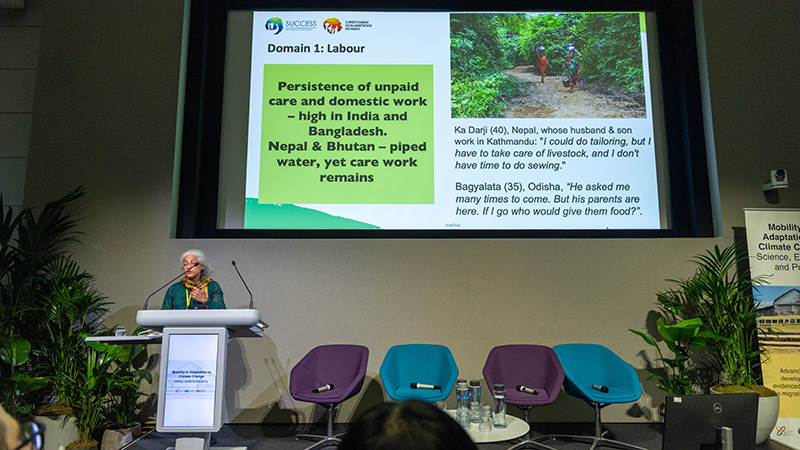
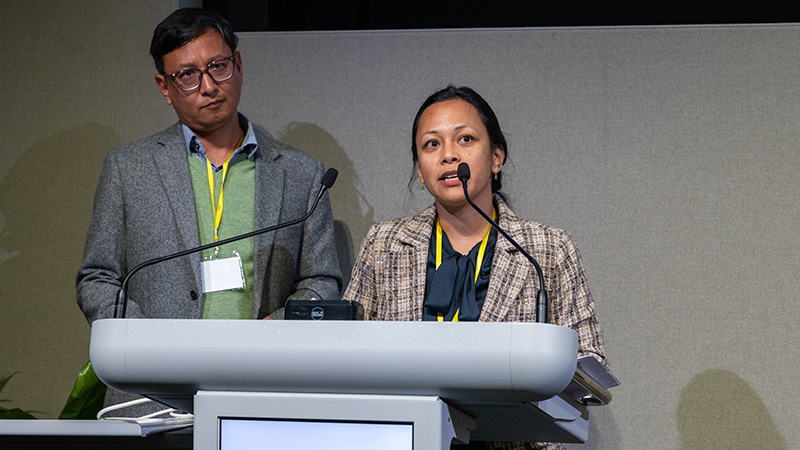
Nitya Rao from the University of East Anglia illustrated how migration decisions are deeply embedded within household dynamics. Drawing on evidence from South Asia, she showed that families often distribute risks and opportunities across multiple members, with some moving for work while others remain behind to manage farms, care responsibilities and social networks. Migration, in this sense, is part of a wider household strategy shaped by gender, resources, aspirations and access to opportunities. Understanding climate mobility requires paying attention not only to who moves, but also to who stays, who takes on additional responsibilities, and how the benefits and burdens of migration are distributed within households.
The conference reminded all of us that mobility is often driven by hope as much as hardship. People move because they want something different for themselves or their families: better opportunities, better livelihoods, better futures. Climate change may influence those decisions, but it is usually only one part of a much larger story.
This is where my own answer to Neil's question felt relevant. I did not leave Ooty because of climate stress or economic distress. I left because I wanted opportunities that were not available to me at the time. Yet decades later, if given the choice, I would still like to return. The tension is not between wanting to leave and wanting to stay. It is between attachment to place and access to opportunity.
The tension is not between wanting to leave and wanting to stay. It is between attachment to place and access to opportunity.
Several presentations explored precisely this relationship between aspiration and mobility. Research presented by Roman Hoffmann highlighted that migration decisions are shaped not only by environmental pressures but also by people's aspirations and their ability to act on them. Not everyone who wants to move can move. Financial constraints, lack of networks, restrictive policies and limited opportunities often prevent people from acting on their preferences. At the same time, not everyone who remains in place necessarily wants to stay.
The conference also challenged simplistic distinctions between voluntary and forced migration. Mobility often exists along a spectrum. People move for multiple reasons at once: to secure livelihoods, support family members, access education, reduce risks or pursue better futures. Climate change increasingly influences these decisions, but it interacts with many other factors rather than replacing them.
A recurring theme was that what happens after migration matters just as much as the act of moving itself. Research on South Asian cities highlighted how migrant wellbeing depends on housing, labour conditions, access to services, social protection and inclusion. Migration does not automatically produce resilience. The outcomes depend on the conditions under which people move and the opportunities available at destinations.
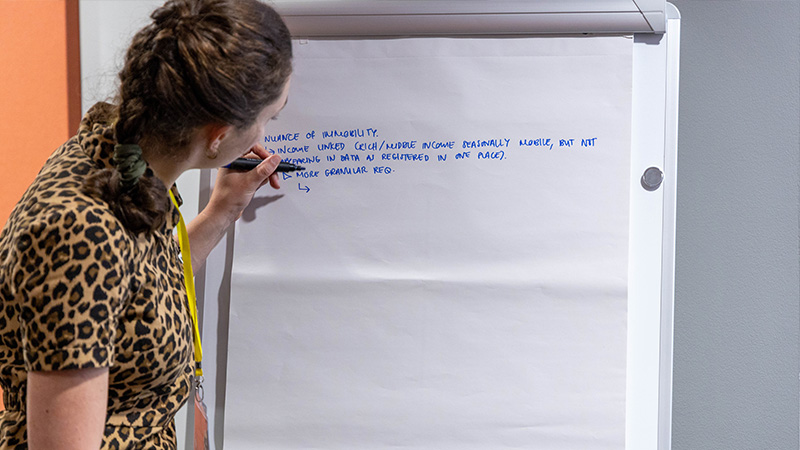
The discussions on immobility were equally revealing. While migration often dominates public attention, millions of people remain in place despite growing environmental risks. Some do so by choice because of strong attachments to land, community and identity. Others remain because they lack the resources required to move. Understanding climate adaptation therefore requires paying attention not only to mobility but also to immobility and the inequalities that shape both.
The conference also highlighted the importance of moving beyond alarmist narratives about climate refugees and mass displacement. Researchers called for more grounded and evidence-based approaches that recognise the diversity of mobility experiences. Migration is not a singular phenomenon. It can be seasonal or permanent, rural or urban, voluntary or constrained, adaptive or maladaptive. Any meaningful conversation about climate mobility must account for this complexity.
"Adaptation to climate change will strain every sinew of governance — generating pathways to sustainability that are inclusive and progressive as well as effective."Neil Adger University of Exeter, UK
"Climate mobility was not covered in-depth, but I found the real possibilities of large-scale displacement of Small Island Developing Nation populations and Pacific communities in the near future very concerning."Amina Maharjan International Centre for Integrated Mountain Development, Nepal
"But there is a lot to do! Adaptation pathways and limits remain niche and focused on particular hazards; leveraging all knowledge systems for institutional change is a work in progress and we need much more empirical work on incentivising adaptation behaviour."Chandni Singh Indian Institute for Human Settlements, India
Perhaps that is why Neil's question stayed with me.
It was not really a question about where I would live. It was a question about what makes mobility possible and what keeps people connected to place. Across two days of discussions, researchers, practitioners and policymakers returned repeatedly to these questions in different ways.
The conference showed that mobility is about far more than movement from one location to another. It is about the opportunities people can access, the futures they imagine, the constraints they face and the attachments they carry with them. Understanding climate mobility requires understanding all of these dimensions together.
And sometimes, it begins with a simple question: if you could go home, would you?